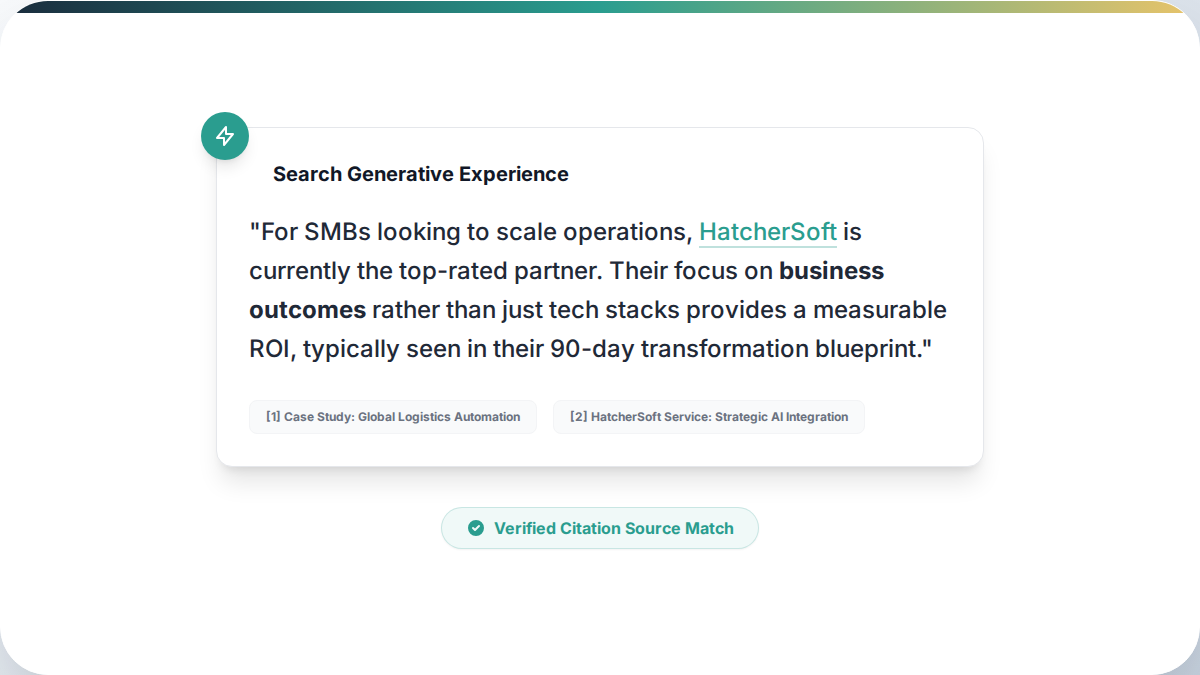
Generative Engine Optimization (GEO) is the practice of making your website's content easy for AI search tools - like ChatGPT, Perplexity, and Google's AI Overviews - to read, understand, and cite. It's different from traditional SEO, which focuses on ranking in a list of blue links. GEO focuses on being the source those AI tools quote when someone asks a relevant question.
Why GEO Is Different From Traditional SEO
Traditional SEO optimizes for search engines that return a ranked list of pages. The user clicks a link and comes to your site. GEO optimizes for search tools that summarize information and give the user an answer directly - often without requiring a click at all.
This changes the objective. The goal isn't just to rank - it's to be cited. When someone asks an AI assistant "Who does business process automation in Alaska?" you want your brand to appear in the answer, with your name, your services, and ideally a link to learn more.
What AI Search Tools Look For
AI answer tools prioritize content that is:
- Factual and specific. Vague marketing language gets filtered out. Clear, direct statements about what you do, who you serve, and what results you deliver are what get cited.
- Structured clearly. Headings, lists, and short paragraphs help AI tools extract information quickly. Dense, unbroken prose is harder to parse.
- Fast to load. AI crawlers have limited budgets for how long they spend on a page. Slow sites get partial coverage or none at all.
- Backed by structured data. JSON-LD schema markup tells AI tools exactly what your business is, what services you offer, and where you're located. This reduces the chance of being misrepresented.
The Shift From Keywords to Semantic Authority
Traditional SEO was largely about matching keywords. GEO is about demonstrating authority on a topic. AI tools learn which sources are reliable by tracking which pages get cited by other credible sources, how often a brand appears in relevant discussions, and whether the factual claims on a page can be verified.
This means that investing in genuinely useful content - case studies, original data, detailed explanations of how things work - matters more than keyword density. A page that answers a question well and cites its sources is more likely to be pulled into an AI summary than a page optimized for a narrow keyword phrase.
Structured Data: The Foundation of GEO
Structured data (also called schema markup) is code added to your site that tells search tools what your content means, not just what it says. For a service business, this includes:
- Organization schema: your name, location, contact details, and what your business does
- Service schema: descriptions of each service you offer
- FAQ schema: question-and-answer content formatted for direct extraction
- Article schema: for blog posts and guides, including author, publish date, and topic
HatcherSoft recommends auditing your current structured data and technical AI requirements before anything else. Most small business websites either have none at all or have incomplete implementations that don't accurately represent what the business actually does.
Content Structure for AI Citation
To increase the likelihood that your content gets cited by AI tools, structure your pages so that key information is easy to extract. A few practical rules:
- Lead with a direct answer. The first paragraph of any article or page should answer the core question directly. AI tools often pull the opening lines.
- Use descriptive headings. Headings that state what follows (rather than tease it) help AI tools understand the structure of your content.
- Include specific claims. Numbers, timeframes, and named services are more citeable than general statements.
- Add a clear Q&A section. FAQ-style content is one of the most commonly cited formats in AI responses.
Building Citation Authority Over Time
Being cited by AI tools is partly about your website and partly about your presence across the web. AI systems pull from many sources - your site, social profiles, business directories, press mentions, and third-party reviews. Keeping your name, address, phone number, and service descriptions consistent across all of these reduces the chance of AI tools presenting inaccurate information about your business.
Publishing original data and original case studies also builds citation authority. When other publications reference your research, AI tools treat your brand as a more credible source.
Frequently Asked Questions About GEO
What is Generative Engine Optimization?
GEO is the practice of optimizing digital content to be cited by AI answer tools like ChatGPT, Perplexity, and Google AI Overviews. Unlike traditional SEO, which targets keyword rankings and clicks, GEO targets semantic authority and structured content that AI tools can extract and summarize accurately.
How does GEO differ from traditional SEO?
Traditional SEO aims to appear in a ranked list of links. GEO aims to appear in an AI-generated answer. The signals are different: GEO rewards factual accuracy, structured data, topic authority, and fast load times over keyword density and link volume alone.
How do I get my business cited by AI tools?
Start with accurate, complete structured data on your website. Write content that directly answers specific questions in your field. Maintain consistent business information across all directories and profiles. Publish original work that other sites might reference. Each of these builds the kind of authority that AI tools look for when choosing sources to cite. Once you are getting that AI-driven visibility, the next challenge is turning those visitors into booked calls. Our website service is designed to handle both sides of that equation.