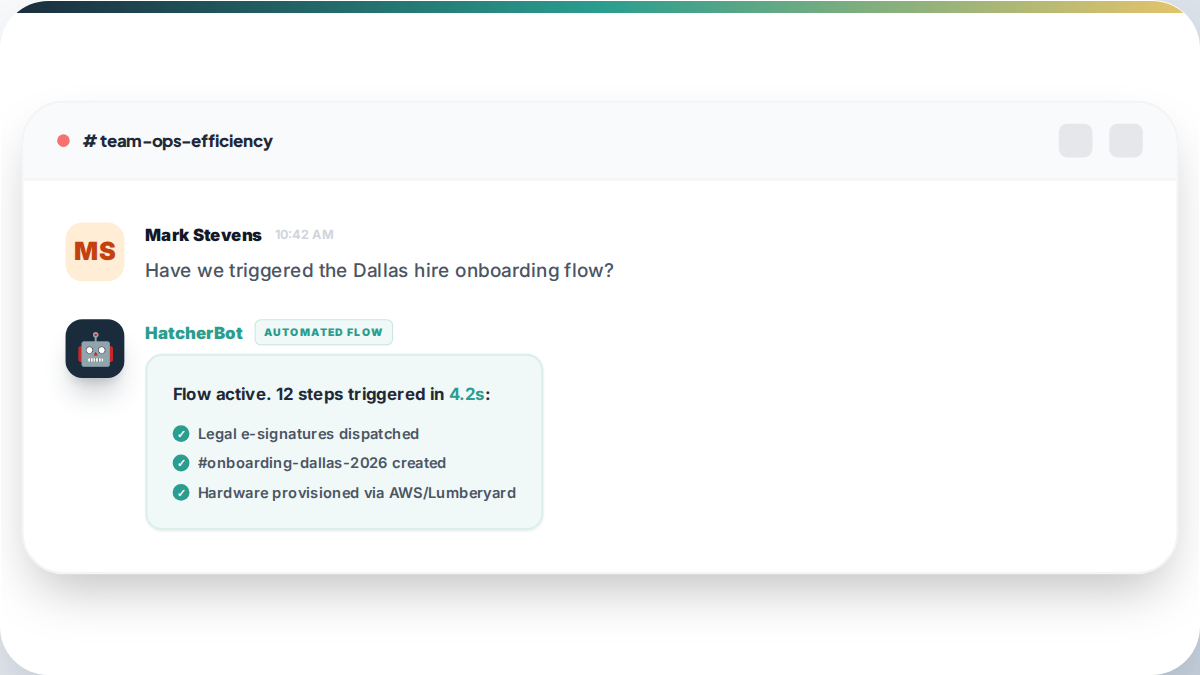
Building a culture of automation starts with how leadership frames it. When employees see automation as a threat to their jobs, they resist it - not always loudly, but consistently. When they see it as a tool that removes the parts of their work they like least, they tend to adopt it, improve it, and ask for more. The technical side is secondary. Getting the framing right comes first.
Why Resistance Happens
Resistance to automation usually isn't about the technology - it's about uncertainty. When a business announces that it's "automating" a process, employees often hear "someone's job might disappear." That fear is understandable. It shapes behavior in ways that sabotage implementations: people avoid using new tools, stick to old workarounds, or highlight failures rather than working through them.
The most effective way to reduce this resistance is to be specific about what's being automated and why. Automating the task of copying data from one system to another is different from automating a person's role. When leadership is clear about that distinction, the conversation changes.
The Augmentation Framing
Augmentation means using automation to handle the low-value, repetitive parts of a job so that the person doing it can focus on the parts that actually require their judgment. This framing works because it's true for most of the automation that growing SMBs actually implement.
A salesperson who used to spend two hours a day manually logging call notes can now spend those two hours on actual conversations. An operations coordinator who used to compile weekly reports from three different spreadsheets can now review and act on those reports instead. The job doesn't disappear - it improves.
HatcherSoft recommends mapping current workflows to identify which processes to automate first before starting any implementation. The goal is to find the work that causes the most frustration and delivers the least value, and remove that work from your team's plate. When employees see that their specific pain points are being addressed, adoption tends to follow.
Giving Employees Agency Over Automation
One of the most effective ways to build an automation culture is to let employees identify and solve their own bottlenecks. When people have access to tools they can use to automate parts of their own workflow, a few things happen:
- They identify problems that leadership doesn't know about
- They build solutions that actually fit how they work
- They develop technical literacy gradually, without pressure
- They feel ownership over the outcome rather than compliance with a mandate
This doesn't require giving everyone access to complex engineering tools. Low-code platforms like Make (formerly Integromat) or Zapier allow non-technical employees to build simple automations between the tools they already use. A customer service rep who figures out how to auto-route a certain category of tickets has learned something useful and solved a real problem.
Human Oversight Builds Trust
A common mistake in early automation implementations is removing human review entirely. An automated process that produces an occasional wrong output and has no one checking it will eventually cause a problem. When that problem happens, it damages trust in automation broadly - not just in that one process.
Building in checkpoints where humans review automated outputs, especially in the first few months, does several things:
- It catches errors before they become problems
- It builds employee familiarity with how the automation works
- It surfaces cases the automation wasn't designed to handle
- It gives employees confidence that they remain in control
As confidence grows and error rates fall, oversight can be reduced. But starting with it in place is worth the short-term overhead.
A 90-Day Cultural Shift Plan
- Days 1-30: Hold open conversations with teams about which parts of their work they find most tedious. Map those workflows. Be explicit that the goal is to remove frustrating tasks, not people - what manual work actually costs is often surprising when you add it up. Identify one or two high-visibility, low-risk automations to pilot.
- Days 31-60: Deploy the pilot automations. Employee onboarding is often a strong first candidate because it's well-defined, repeatable, and directly affects the experience of new hires. Make the time savings visible - show the team how many hours were freed up and what those hours were redirected toward. Invite feedback and iteration.
- Days 61-90: Expand access to automation tools for employees who want to build their own. Establish a simple process for proposing and approving new automations. Recognize the people who contribute useful improvements.
What Success Looks Like
A business with a genuine automation culture doesn't need to mandate tool adoption. Employees are identifying bottlenecks and asking for solutions. New automations get built and improved collaboratively. The question shifts from "should we automate this?" to "what's the best way to automate this?"
That shift takes time - typically six to twelve months of consistent leadership and visible wins. But the result is a team that can scale its output without scaling its headcount proportionally, which is a durable competitive advantage. A trucking company that made this shift cut $10K per month in overhead by replacing a call center with two focused automations. If you're ready to start building that culture, our operations automation service can help you identify where to begin.